
Understanding Ocean Freight
Logistic
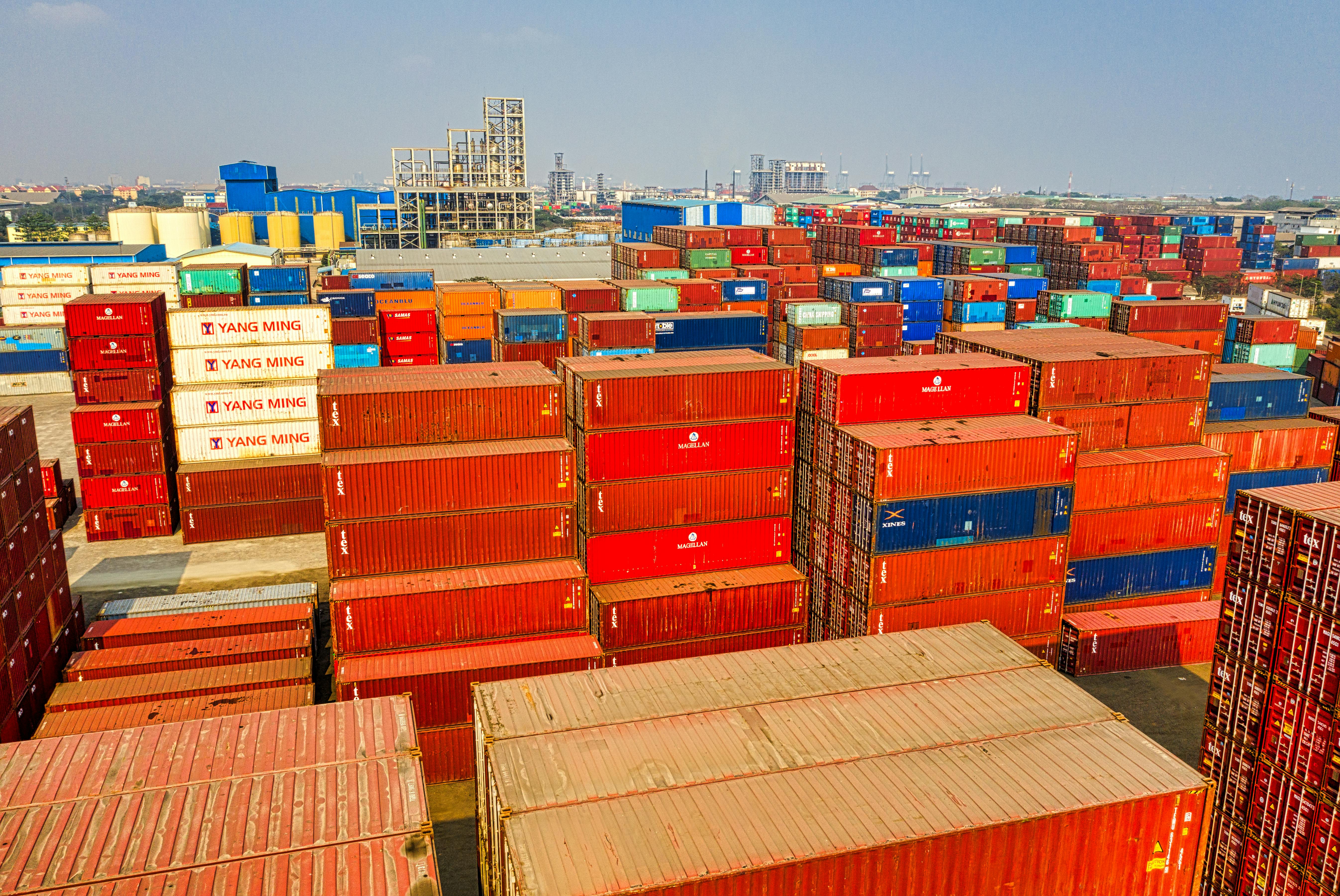
Understanding Ocean Freight: Why FCL is the Only Profitable Way to Import Office Chair Components
When planning your first import of office chair components (such as plastic backrests, adjustable armrests, and five-star bases), it is natural to consider starting with a small trial order via LCL (Less than Container Load).
However, office chair components are highly volumetric (bulky but relatively light). In international logistics, shipping small volumes of bulky goods via LCL exposes you to the "LCL Destination Fee Trap." While the initial ocean freight quote for a few cubic meters (CBM) might look cheap, the hidden local handling fees at your destination port often exceed the value of the goods themselves.
To build a sustainable, profitable business, switching your budget to an FCL (Full Container Load)—even a starting 20GP container—is the most effective way to minimize unit costs and maximize your profit margins.

LCL vs. FCL: Core Logistics Comparison
Feature | Less than Container Load (LCL) | Full Container Load (FCL) | The FCL Advantage |
Pricing Basis | Charged per Cubic Meter (CBM) or weight. | Flat rate per container (20GP, 40GP, 40HQ). | Massive economies of scale. Cost per CBM drops drastically as you fill the box. |
Destination Fees | Very High. Includes mandatory CFS (Container Freight Station) decoupling, handling, and warehouse sorting fees. | Low & Predictable. Standard Terminal Handling Charges (THC) per container; no split-handling fees. | No hidden surprises. You avoid expensive local warehouse handling and sorting fees. |
Risk of Damage | High. Goods are handled multiple times, stacked, and co-loaded next to unknown cargo from other shippers. | Very Low. The container is loaded at our factory, sealed, and opened only at your warehouse. | Crucial for Office Chairs. Protects plastic backrests and armrests from scratches, dents, or crushing. |
Transit Time | Slower. Requires extra 5–10 days at origin for consolidation and at destination for deconsolidation. | Fast & Direct. Moves straight from port to port, then directly to your door. | Better Inventory Flow. Faster turnaround times and fewer custom hold delays. |
Customs Risk | Shared Risk. If another shipper’s cargo in your shared container fails customs, the entire container is delayed. | Independent. Your customs clearance depends solely on your own paperwork. | Total Control. Eliminates supply chain bottlenecks caused by third-party mistakes. |
Real-World Cost Breakdown: The LCL "Destination Fee Trap"
To give you a realistic look at shipping economics, let's look at a typical market example for a shipment coming from China to a major Western port (e.g., US West Coast or Europe).
Office chair parts like 5-star bases and plastic backs take up significant space. Let’s compare a small 3 CBM LCL order (approx. 50–60 sets of parts) against filling a standard 20GP FCL container (28 CBM capacity, approx. 500 sets of parts).
Scenario A: Shipping 3 CBM via LCL
Base Ocean Freight: $100 per CBM × 3 CBM = $300
Origin CFS & Document Fees: Flat $150
Destination CFS Deconsolidation & Port Handling: ~$50 per CBM (with minimums) = $150
Destination Documentation & Release Fees: Flat $125
Local Warehouse Drayage/Trucking (LCL shared): Flat $250
Total LCL Shipping Cost: $975
Effective Shipping Cost Per CBM: $325 / CBM
Scenario B: Shipping a Full 20GP Container (28 CBM)
Flat Ocean Freight Rate: Flat $2,600
Origin & Destination Terminal Charges (THC) + Docs: Flat $650
Local Container Drayage (Direct to your warehouse): Flat $450
Total FCL Shipping Cost: $3,700
Effective Shipping Cost Per CBM: $3,700 ÷ 28 CBM = $132 / CBM
💡 Key Takeaway
By scaling your order from LCL to FCL, your shipping cost per cubic meter drops from $325 to $132—a savings of nearly 60% on logistics alone! > When importing LCL, the fixed local fees (CFS handling, documentation, release fees) stay almost the same whether you ship 1 CBM or 5 CBM, completely wiping out your wholesale price advantage.
Why FCL is Mandatory for Office Chair Components
Volumetric vs. Gravimetric Weight: Office chair components (plastic backrests, nylon 5-star feet) are structural and hollow. They take up large volumes of space but do not weigh much. Because LCL is priced heavily on volume (CBM), you pay premium freight rates for shipping "air" inside the gaps of loose cartons.
Nesting and Palletization: In an FCL container, we can optimize space specifically for your order—nesting five-star bases together and tightly packing backrests to ensure you get the absolute maximum number of units into the container. In LCL, tight customized packing is often disrupted by warehouse workers who must rearrange the container to fit other companies' cargo.
Cosmetic Integrity: Office chair components are highly sensitive to surface cosmetic damage. Scratched plastic backrests or scuffed armrests cannot be sold to high-end B2B clients. LCL cargo is handled at least 4 to 6 times more than FCL cargo through various transit warehouses, heavily increasing the risk of friction damage.
Our Strategic Recommendation for First-Time Importers
If you are serious about launching or expanding your office chair business, we strongly advise adjusting your initial purchasing budget to match a Full Container Load (20GP or 40HQ).
A small LCL order forces you to artificially inflate your local retail prices just to cover the bloated logistics fees, making your business uncompetitive from day one. Investing in a full container ensures:
The absolute lowest landed cost per unit.
Perfect product quality upon arrival.
A healthy stock level to immediately fulfill local orders without making your clients wait weeks for erratic LCL timelines.
We are happy to help you calculate the exact mix of backrests, armrests, and bases needed to perfectly fill a 20GP or 40HQ container to maximize your investment. Let us know your target product mix, and we will optimize the container load for you!